Paris · Hotels
Cheval Blanc Paris & Dior Spa Cheval Blanc Paris
We selected this hotel because it is the clearest expression yet of what an LVMH-owned...
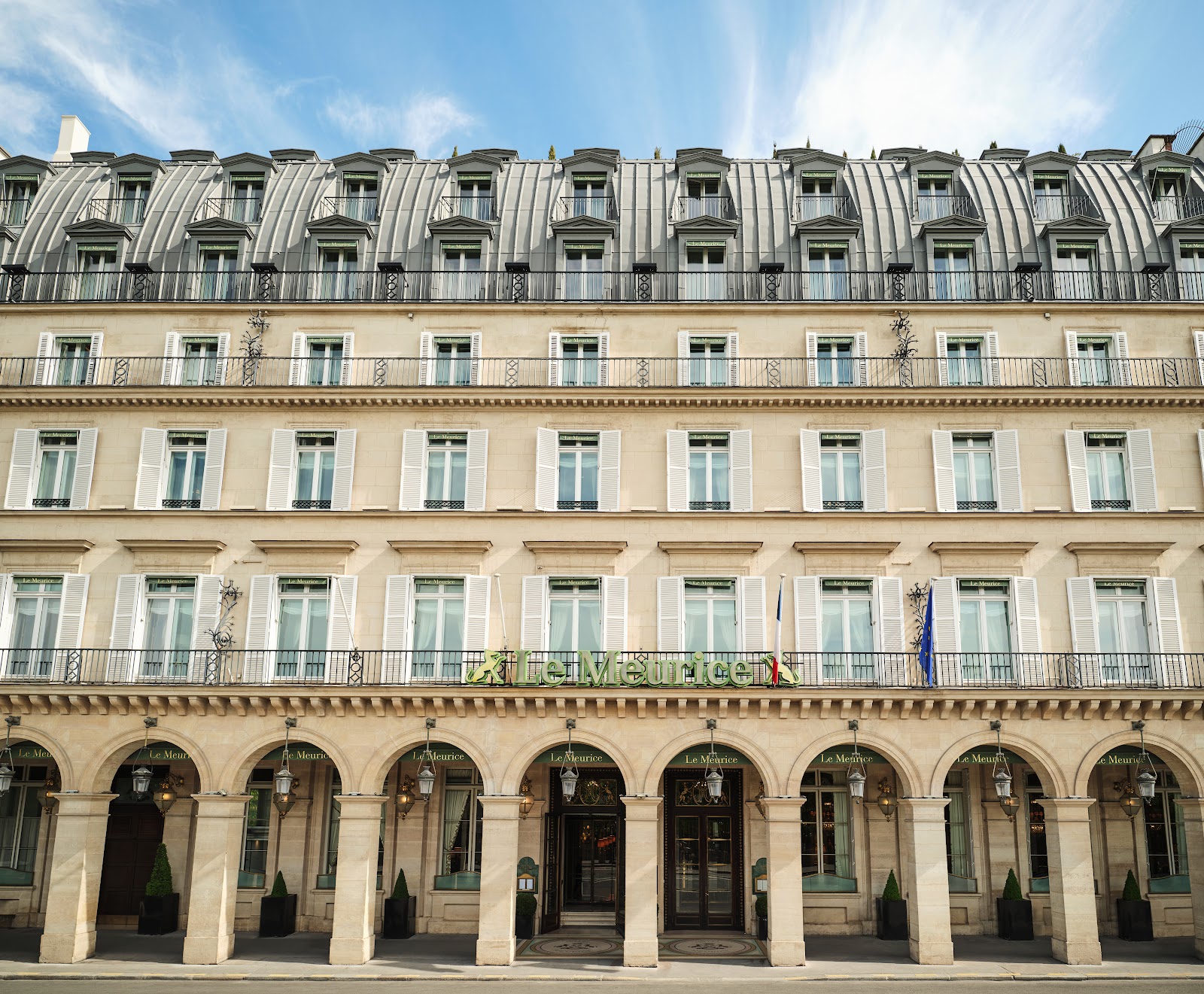
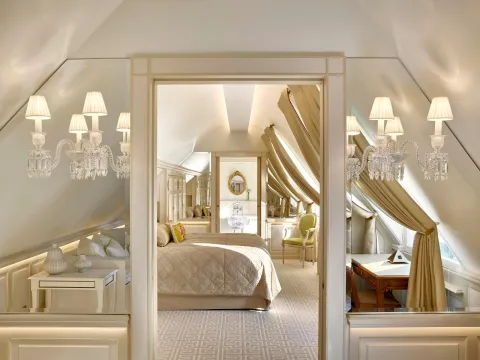
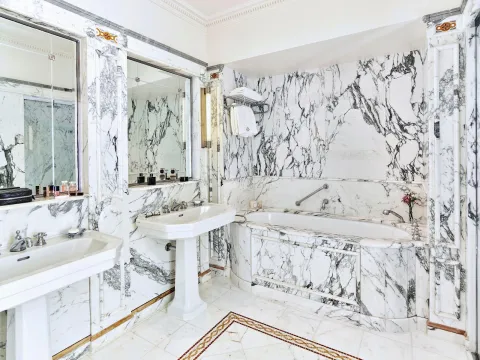
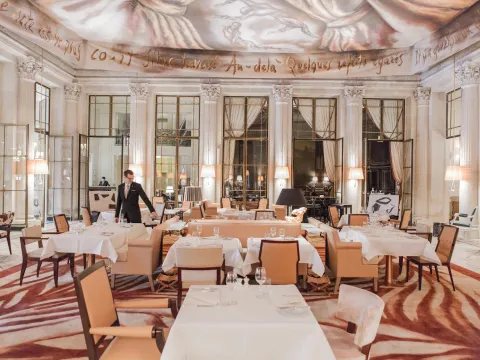
Le Meurice has stood on Rue de Rivoli since 1835, two decades after Charles-Augustin Meurice first opened a hotel of the same name near the Palais-Royal. Salvador Dalí kept the old Royal Suite, once used by King Alfonso XIII, for about a month every year across more than three decades, and the hotel's wartime history runs darker: during the Occupation it served as the headquarters of the German military governor of Paris, a period tied to the phrase 'Is Paris burning?'. Few hotel addresses anywhere carry this particular range of history under one roof, from a Spanish king to a Surrealist painter to an occupying army.
We chose this hotel because its 2007 renovation, led by Philippe Starck and general manager Franka Holtmann, treated the building's Louis XVI heritage as something to restore rather than replace, bringing back original mosaics and mouldings while adding a new ground-floor entrance on Rue de Rivoli. Alain Ducasse, who took over the main dining room's three Michelin stars in 2013, gives the hotel a kitchen that matches its historical weight, and the 145-square-metre canvas Ara Starck painted above Restaurant Le Dali shows the renovation wasn't only about preservation. Few palace hotels balance that much restraint and that much flourish under one roof.
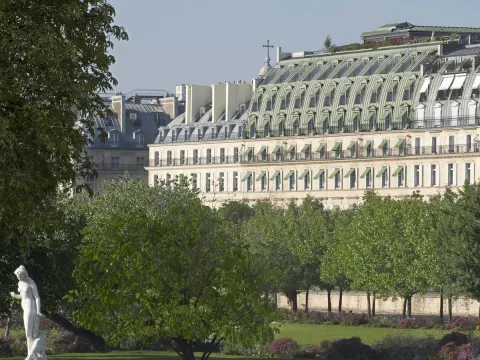
The hotel faces the Tuileries Garden directly across Rue de Rivoli, putting the Louvre, the Place Vendôme and the Jardin des Tuileries all within a short walk. It is a position built for guests who want to move between the city's major museums and gardens on foot, with the arcaded shops of Rue de Rivoli immediately below the hotel's own windows, useful on a rainy afternoon when the gardens themselves are less inviting.
Price: Luxe
Vibe: Louis XVI restoration, layered history, formal grandeur
Rooms: 160 rooms and suites
Best For: history-minded travellers, serious diners, guests wanting Tuileries views
Our Favorite Thing About the Hotel: the lobby elevator, a copy of the sedan chair used by Marie Antoinette
Dining: Restaurant Le Meurice (three Michelin stars, chef Alain Ducasse), Le Dali, Bar 228
Amenities: spa, fitness area, sauna
Attractions: Tuileries Garden (across the street), the Louvre and Place Vendôme (short walk)
Starck's 2007 renovation worked within the hotel's existing Louis XVI style rather than imposing a new one, restoring mosaics and mouldings and adding underground heating and cooling infrastructure that let the public rooms keep their original proportions. The main entrance moved to Rue de Rivoli during the project, and the Pompadour salon, with its white trim, remains one of the clearest examples of the period style the renovation set out to protect rather than modernize, a choice that reads as conservative only until you compare it to Le Dali next door.
Restaurant Le Meurice, under chef Alain Ducasse since 2013, holds three Michelin stars and anchors the hotel's dining reputation at the most formal end of the register. Le Dali, the more relaxed option, sits beneath a 145-square-metre canvas Ara Starck painted for the space, a visual anchor that gives the room an identity distinct from the main restaurant's classicism. Bar 228 rounds out the evening with leather armchairs and dark woodwork, built for cocktails rather than a full meal, and keeps its own hours independent of the two restaurants.
At 160 rooms, this is a large palace hotel, so travellers after the intimacy of a small hôtel particulier should look at a smaller address instead. The Rue de Rivoli position means a view of the Tuileries Garden is worth requesting specifically, since not every room faces the street side. Dining here leans formal, particularly at the main restaurant, so pack accordingly if a table at Ducasse's dining room is part of the plan, and book that table well before arrival given the restaurant's reputation.