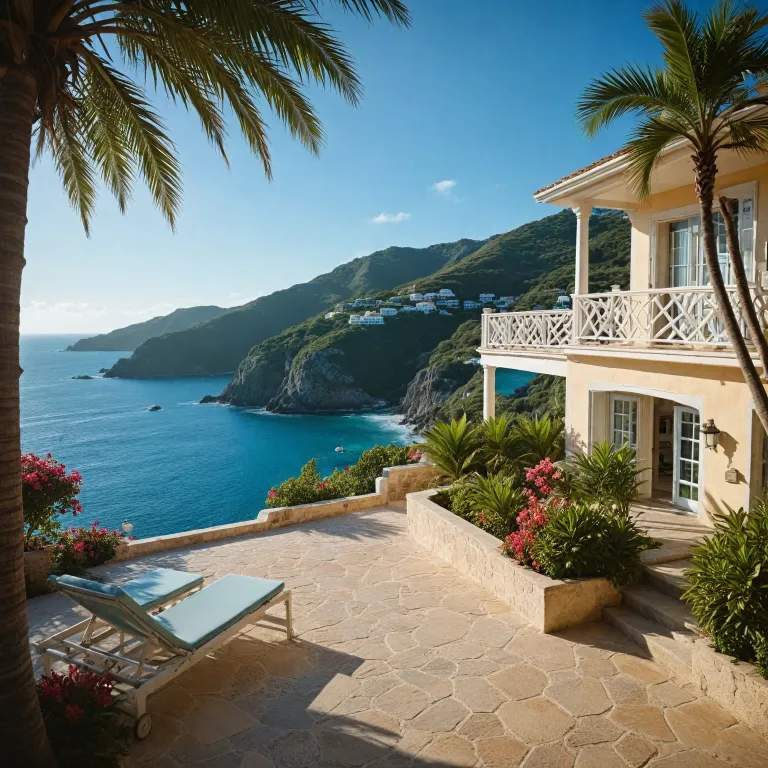
St Barthélemy French West Indies as a benchmark for luxury stays
St Barthélemy French West Indies offers a rare blend of French elegance and relaxed Caribbean island rhythm. This small island, often called Saint Barth or St Barts, has become a reference point for travelers seeking refined hotels with discreet service. Its status as a French overseas collectivity ensures European standards while preserving a strong local identity.
The capital, Gustavia, concentrates many of the island’s most exclusive addresses, with terraces overlooking the harbour and a sweeping view of yachts at anchor. Around the port, luxury hotels echo the heritage of France while embracing the colours and textures of the wider Caribbean islands. Guests move easily between the French language, English, and the cosmopolitan codes of international travel.
For a premium hotel booking website in France, positioning St Barthélemy French West Indies alongside Paris, the Riviera, and the Alps creates a coherent high end portfolio. The same client who books a palace in France may extend a journey to this caribbean island for winter sun. Curated content must highlight how Saint Barthélemy, also known as St. Barts, is a French overseas collectivity in the Caribbean, renowned for its luxury tourism and pristine beaches.
Saint Barthélemy, or Saint Barth, covers only 21 km² yet offers a surprising variety of settings. From the intimate coves near Shell Beach to the open horizon of Saint Jean, each beach suggests a different style of stay. A serious booking platform should present these nuances clearly, guiding guests toward the best match between location, atmosphere, and service expectations.
Understanding the geography of Saint Barth for smarter hotel choices
Choosing a hotel in St Barthélemy French West Indies starts with understanding its compact but diverse geography. The island is shaped by a series of hills and bays, which means every district offers a distinct view and micro atmosphere. For travelers used to larger caribbean islands such as Guadeloupe or Saint Martin, the scale of Saint Barthélemy feels intimate yet surprisingly varied.
Gustavia lies on the west coast and serves as the administrative and social heart of Saint Bart. Here, the influence of France is visible in the harbourfront cafés, the church dedicated to a saint, and the Swedish era street grid. Many premium hotels take advantage of the harbour view, ideal for guests who enjoy walking to restaurants, luxury shops, and Shell Beach within minutes.
On the north coast, Saint Jean stretches along a luminous bay that has become one of the best known addresses in the caribbean. The legendary Eden Rock rises on a rocky promontory, offering a panoramic view over the turquoise water and the runway. Around Saint Jean, hotels range from intimate hideaways to larger resorts, all benefiting from easy beach access and a lively yet relaxed atmosphere.
Further east, the Grand Cul de Sac and the neighbouring cul de sac bays offer a calmer setting for families and water sports enthusiasts. Here, the lagoon is protected, and hotels often open directly onto the sand, with views over kite surfers and paddle boards. A refined booking website should clearly differentiate Grand Cul de Sac, Saint Jean, and Gustavia, helping guests align their travel style with the right part of Saint Barth.
Iconic addresses and how to evaluate true luxury in Saint Barth
Names such as Eden Rock and Cheval Blanc have helped shape the global image of St Barthélemy French West Indies. These properties, along with refined hotels like Carl Gustaf above Gustavia, set a benchmark for service, design, and gastronomy on the island. When integrated into a French luxury hotel booking website, they anchor the destination within a familiar constellation of prestigious brands.
On Saint Jean beach, Eden Rock combines a dramatic rock setting with personalised service that reflects both French art de vivre and caribbean warmth. Over on the west coast, Cheval Blanc on Flamands beach offers a different interpretation of luxury, with a softer, residential feel and a deep focus on wellness. In Gustavia, Carl Gustaf overlooks the harbour and Shell Beach, creating a link between the town’s energy and the calm of a hillside retreat.
For travelers comparing options across France and the wider French West Indies, objective criteria become essential. A serious platform should highlight room sizes in square metres, the ratio of suites to rooms, and the presence of private pools or direct beach access. It should also explain how each property interprets Saint Barth’s identity, whether through French gastronomy, caribbean design elements, or partnerships with local artisans.
Luxury in Saint Barthélemy is also defined by discretion and the ability to tailor each stay. Some guests prefer the intimacy of smaller properties near Saint Jean, while others choose larger resorts in Grand Cul de Sac for family travel. By presenting both singular and plural experiences of Saint Bart, Saint Barth, and Saint Barthélemy, a booking website can respect the island’s diversity while maintaining a coherent premium narrative.
From France to St Barts: planning seamless premium travel logistics
Although St Barthélemy French West Indies belongs to France, reaching the island requires careful planning. There are no direct long haul flights, so most travelers connect via Saint Martin, Guadeloupe, or the United States before a short transfer. A high quality booking website should explain these routes clearly, integrating hotel choices with flight and ferry options.
Many guests arrive through Saint Martin, then continue by small plane to Saint Barth airport near Saint Jean. Others prefer a ferry crossing, arriving directly into Gustavia with a first view of the harbour and Shell Beach. For travelers combining several caribbean islands, including Guadeloupe or neighbouring Saint Martin, the platform should suggest logical itineraries and overnight stays.
Because Saint Barthélemy is an overseas collectivity of France, the euro is used and French remains the official language. This simplifies payments and reassures guests who already travel frequently within France and the wider French West territories. At the same time, the island’s proximity to the United States and other caribbean island hubs makes it easy to integrate into multi stop travel plans.
In the middle of the booking journey, editorial content can guide users toward related inspirations such as refined comfort in pet friendly luxury hotels in France. This reinforces the connection between mainland France and Saint Barth, encouraging guests to see them as complementary experiences. By presenting both the singular island of Saint Bart and the plural network of French West Indies destinations, the website becomes a trusted travel companion rather than a simple reservation tool.
Governance, sustainability, and the role of local institutions in Saint Barth
Behind the polished image of St Barthélemy French West Indies lies a precise institutional framework. As an overseas collectivity, the island has its own territorial council that works alongside the French state on key issues. For a discerning audience, understanding this structure reinforces confidence in safety, infrastructure, and long term planning.
The Saint Barthélemy Government oversees local administration, from urban planning to environmental regulations that affect hotel development. In parallel, the Tourism Committee of Saint Barthélemy plays a central role in promoting the island and providing reliable information to visitors. Their work supports both established icons like Eden Rock and Cheval Blanc and newer properties in areas such as Grand Cul de Sac or the hills above Saint Jean.
Environmental conservation is a major theme across the French West Indies, and Saint Barth is no exception. Hotels near sensitive bays and each cul de sac are encouraged to manage water, energy, and waste with care, preserving the caribbean island ecosystem. Guests increasingly expect transparent communication about these efforts, and a premium booking website can highlight certifications, reef protection programmes, and partnerships with local associations.
By presenting governance and sustainability clearly, the platform strengthens its authority and aligns with the expectations of international travelers. Clients arriving from France, the United States, or other caribbean islands can compare practices and make informed choices. This approach respects both the singular identity of Saint Barthélemy and its plural connections within the wider network of French and caribbean destinations.
Designing a French luxury booking experience tailored to Saint Barth
For a luxury and premium hotel booking website in France, integrating St Barthélemy French West Indies requires more than listing properties. The interface should evoke the island’s light, its beach culture, and the refined codes of French hospitality. Visuals might alternate between the harbour of Gustavia, the curve of Saint Jean beach, and the tranquil lagoon of Grand Cul de Sac.
Content must balance inspiration with precise, verifiable information that reflects E-E-A-T principles. Detailed room descriptions, clear metrics in square metres, and transparent pricing policies help users compare Saint Barth hotels with those in mainland France. At the same time, editorial pieces can explore themes such as gastronomy, spa rituals, or art collaborations that link Saint Barth to other caribbean islands and to the French cultural sphere.
Search filters should allow guests to refine by area, from the west coast near Shell Beach and Carl Gustaf to the north shore around Eden Rock and Cheval Blanc. Additional filters can highlight panoramic view suites, direct beach access, or proximity to water sports in Grand Cul de Sac. By reflecting both singular preferences and plural travel patterns, the platform respects the complexity of modern luxury travel.
Finally, multilingual support in French and English, with clear references to Saint Bart, Saint Barth, and Saint Barthélemy, reassures an international audience. Whether clients arrive from the United States, Europe, or neighbouring caribbean islands, they encounter consistent, trustworthy information. This is how a French booking website can position St Barts and the wider French West Indies as an integral part of a seamless, high end travel portfolio.
Key statistics about Saint Barthélemy French West Indies
- Population of approximately 11 500 people, reflecting an intimate island community.
- Land area of around 21 km², making Saint Barth one of the smaller inhabited Caribbean islands.
- Population density exceeding 500 people per km², concentrated mainly around Gustavia and Saint Jean.
- Internet penetration rate close to 45 percent, supporting connected luxury travel experiences.
Frequently asked questions about Saint Barthélemy
What is the capital of Saint Barthélemy ?
The capital of Saint Barthélemy is Gustavia, a harbour town on the west coast. It concentrates many administrative services, luxury shops, and several premium hotels. From Gustavia, visitors can easily reach Shell Beach on foot and explore the rest of the island by car.
What is the official language of Saint Barthélemy ?
The official language of Saint Barthélemy is French, used in administration, schools, and most public signage. However, English is widely understood in hotels, restaurants, and shops, reflecting the island’s international clientele. This bilingual environment makes it easy for travelers from many countries to communicate.
What currency is used in Saint Barthélemy ?
The currency used in Saint Barthélemy is the euro (€), as the island is part of the French monetary system. Most hotels, restaurants, and shops accept major credit cards alongside cash payments. This alignment with France simplifies budgeting for visitors who already travel frequently within the eurozone.